Categories
Hockey

The Evolution of the Hockey Stick

Whether it’s a booming slapshot from the point or a slick deke on a breakaway, the hockey stick is at the heart of the game and its construction is more complex than it may seem.

Modern hockey organizations, from NHL teams to junior clubs, often rely on partnerships with major stick manufacturers like CCM, Bauer and TRUE Hockey. These companies produce customized sticks designed to match each player’s unique preferences from flex and kick point to blade curve and grip texture.

“Each stick is basically an extension of the player’s body,” said Craig Desjardins, vice-president of product innovation at Bauer Hockey. “The wrong stick can throw off everything, shot accuracy, release time, even comfort on the ice.”

While wooden sticks still have a nostalgic place in hockey history, they’ve largely been replaced by composite models. Most sticks today are made from layers of carbon fibre and resin, built for strength, flexibility and lightness.

The process starts with sheets of carbon fibre laid in specific patterns to control flex. These sheets are wrapped around a mould, forming the shaft, before being combined with the blade and cured in a high-temperature oven. Bauer applies its signature finishes: tactile grips, blade textures, and graphics that vary by model and player preference.

“Depending on the stick’s flex rating, we’ll adjust how many layers of carbon go into the shaft and how tightly they’re woven,” said Riaz Miller, an employee at Bauer Hockey. “That controls the energy transfer during a shot.”

The Stickmaking Process

Step 1

Creating the shaft with sheets of carbon fibre. These sheets are wrapped around a mould, forming the shaft.

Step 2

Building the blade the shape of the blade is wrapped in layers of carbon fiber. Then placed into a two-part mold.

Step 3

Assembling the Shaft and Blade the hardened shaft and blade are bonded together using glue then smoothing the edges.

Step 4

Painting and Graphics the stick is painted, and logos are added.

A clear coat is applied to protect the graphics and surface.

Step 5

The sticks get a grip coating or textured surface on the shaft.

Step 6

A final inspection ensures the sticks meet quality standards before getting shipped.

After curing, each stick is cut to size, painted, and finished with details like grip coating and decals. For professionals, the customization goes even further.

While NHL stars like Connor Bedard and Auston Matthews use highly customized Bauer sticks, the same technology is available to young players and weekend warriors.

“When a player like Matthews wants a certain flex profile or blade stiffness, we build that to spec,” said Miller. “But then we take that feedback and apply it to our retail sticks so that players everywhere can benefit from elite-level performance.”

Bauer also offers MyBauer a custom program that lets amateur players personalize everything from blade curve to flex to grip finish.

“Players are more educated than ever,” Miller added. “They know what they like, and we’re giving them the tools to build their perfect stick.”

Bauer tests the durability and performance of its sticks under extreme conditions, using advanced materials like boron fibre and a range of lab simulations. “We put our sticks through rigorous testing using specialized machines,” said Desjardins. “Then we validate that with real-world performance data from professional players.”

The company also monitors specific metrics, such as flex ratings, a number that indicates how much weight is needed to bend a stick one inch from its neutral position. “Understanding flex helps us matchsticks to playing styles and physical strength,” he said.

To keep sticks in top shape, Bauer recommends players take care of them off the ice too. “Store your stick in a cool, dry place to prevent warping or damage,” Desjardins advised. “Keep it clean, dry, and replace the tape regularly. Avoid leaving it in direct sunlight or near heat sources.”

As the pace of the game continues to rise, several manufacturers remain committed to crafting the perfect stick, one flex point, one curve, and one goal at a time.

The post The Evolution of the Hockey Stick appeared first on Elite Level Hockey.

Categories
Hockey

Canadian Blind Hockey Association is changing the game

Walking into the arena, it feels like any other hockey game — cold air, the sound of skates on fresh ice, the anticipation building in the stands. But as the puck drops, something unique happens.

Instead of the sharp clack of a traditional puck, the game opens with a rattling clang-clang, a hollow metallic sound that echoes through the rink.

The Canadian Blind Hockey Association (CBHA) is changing the game for athletes who are blind or partially sighted, offering a chance to play Canada’s sport in an inclusive competitive environment.

”Blind hockey is about more than just the game  It’s about the community confidence and breaking barriers. We’re creating opportunities for players of all skill levels to experience the sport in a way that suits their ability.” said Matt Morrow, executive director of the CBHA.

Founded to promote and develop blind hockey across the country, the CBHA runs a variety of programs, from introductory “Try Blind Hockey” sessions to the Canadian National Blind Hockey Tournament, which has grown to be the largest event of its kind. In 2025, a record 190 players participated across seven divisions.

Hockey for the blind continues to grow

Blind hockey is adapted for athletes with varying degrees of vision loss, from approximately 10% vision to complete blindness. The sport utilizes an adapted puck that is larger than a standard puck and emits noise, allowing players to track its movement.

“The sound of the puck rattling down the ice, it becomes our heartbeat. It’s not just a noise, it’s direction, it’s energy, and it tells every player you’re in the game.” said Mel Carrey, the marketing manager at CBHA.

To maintain fairness, teams must have at least one completely blind player on the ice at all times. Goalies are required to be fully blind or have minimal vision, and passing rules ensure that players rely on teamwork rather than individual breakaways. Nets are slightly smaller than those in traditional hockey, and officials blow a whistle to signal when the puck is in the offensive zone to help orient players.

The CBHA has expanded programming nationwide, with regional teams in cities such as Ottawa, Vancouver, and Montreal.

“We’re growing, and that means more people have the chance to get on the ice,” said program director Luca DeMontis. “It’s inspiring to see how much this sport means to players and their families.”

The organization has also partnered with groups like Accessible Media Inc. (AMI) and The CNIB Foundation to support its initiatives. “We’re proving that vision loss isn’t a barrier to playing the sport we love.” DeMontis said.

The CBHA’s efforts extend beyond the rink. The organization works with schools, community groups, and rehabilitation programs to raise awareness about blind hockey and its benefits.

“ Blind hockey isn’t just about playing a sport. It’s about changing perceptions of what people with vision loss can achieve. Our players are role models showing young athletes that anything is possible.” Morrow said.

The association is also working to expand its youth and development programs, encouraging children with vision loss to take up the sport at a young age.

“The earlier they start, the more confident they become in their abilities—not just in hockey, but in life,” DeMontis added.

As the CBHA continues to grow, they hope to keep expanding the game and improving player development, and ensuring that blind and partially sighted individuals have the opportunity to experience the game.

“ We’ve seen incredible growth in the last few years, from small community rinks to national tournaments. Every new city we launch a program means more kids discovering that they can be long on ice.” Carrey said.

With its commitment to accessibility and inclusion, the CBHA continues to make hockey a game for all, ensuring that every athlete regardless of vision can hear the puck, feel the ice and experience the thrill of the game.

The post Canadian Blind Hockey Association is changing the game appeared first on Elite Level Hockey.

Categories
Hockey

Saying goodbye to minor hockey

I’m waiting in the Durham West Lightning U18A dressing room for the young ladies to arrive.

The room is decorated with banners, balloons, and tinsel curtains. Jerseys are displayed around the room with hand-made posters of each player hanging above them.

It’s Senior’s Night. 

In this moment of solitude, I take in the decor, which represents the end of their hockey careers and, for many, their childhood.

Every spring, across Canada, players turning 18 hang up their skates and graduate from the minor levels of the sport. While a few may continue playing at the university or professional level, most will either join an adult recreational league or never play again.

They are moving on to post-secondary education and the next chapter of their lives. 

For most of the girls and their parents, this marks a major lifestyle change. For the past 14 years, their love of the sport has meant spending much of their family time at the rink.

They’ve driven to early morning practices, raced from school to the rink while eating dinner in the car, and spent weekends at tournaments both locally and across Canada and the United States.

Some have even traveled to Europe for tournaments.

Some players have always played together.

Some have played on teams all across the region. Whether on the same team or as opponents, these girls have been playing hockey together for years.

Through all that time spent together, these players and their parents have formed strong bonds — they’ve become a family. 

This year, they all somehow ended up together for their final season which included a few wins, a few silver medals and an epic trip to Nashville. The team has a large graduating class.

Ten players will be moving on, meaning with over half of the players leaving, the team will look very different next season. It’s now up to the younger players to take the lead, and they’re ready for the challenge. 

Earlier, the minor players (Amanda, Ella, Kara, Kennedy, Nyah and Sara) prepared the celebration.

As they decorated the dressing room, the atmosphere was a mix of giggles as they struggled to control over-inflated balloons and emotional moments as they looked at old photos from their early hockey days. “Skyley was so cute,” said Mia, wiping away a tear.

Some of the others gathered around her, gazing at the banner of their team captain. Then one of them glanced at the clock and realized the seniors would be arriving soon.

They quickly got to work, coordinating their efforts like they do on the ice. Once the room was ready, they briefly admired their work before being shooed out by Christina, the team manager. 

When the seniors entered the room with their parents, I was reminded of the museum exhibit scene from the end of movie A League of Their Own, where the families take in the moment, absorbing its significance.

There was a brief silence as they reflected, and then the tears began to flow, followed by hugs. Soon, the parents joined in. I felt deeply honored to witness such a special moment. I watched as the players recalled memories.

They teased each other over the baby-faced photos of little girls in too-big jerseys and sagging socks taped tightly to keep them up.  

Dads who suddenly realized that the ride was coming to an end awkwardly joked about all the money they would save, and moms spoke of being able to make vacation plans that don’t revolve around hockey.

A thin disguise hiding how much they were going to miss their hockey parent days.

A few minutes later, the younger players — the minors — entered the room, also becoming emotional. While it wasn’t their day, they knew they would miss their hockey sisters and role models.

It was also a reminder that their own day to hang up their skates was approaching all too quickly. 

It wasn’t long before Kaleigh, one of the seniors, rallied the group. They had a game to play. While often the senior’s night is held on their very last game, this was an exhibition game designed to keep the team in top shape.

Both teams still had games to play in the provincials in the upcoming weeks, some players also had tryouts ahead of them. The exact date of their final game was still uncertain so this one was ceremonial.

Once in uniform, there was an official on-ice red carpet ceremony. To emphasize the importance of the night, the opposing team, the Scarborough Sharks U18A, joined them on the ice.

The Sharks cheered each player, showing the ultimate respect for their longtime rivals. 

Coach Tim spoke about each senior player’s accomplishments, sharing details about their post-secondary plans, their fondest hockey memories, and their nicknames.

Then Amanda, who will have her own Senior’s Night next year, spoke on behalf of the minors. She paused several times, choking up as she spoke, sharing personal moments that demonstrated how much the seniors meant to their younger counterparts.

Each senior received a suitcase as a gift — a symbolic gesture representing the many adventures that lie ahead. 

As the players left the arena after the game, they smiled and ate the cupcakes provided by the Sharks. It had been an emotional night, but with the provincials still ahead, they knew they had more ice time to come.

When their final skate does happen, it will be bittersweet — hopefully made a little sweeter if it includes a provincial gold medal.

Congratulations to the 2025 graduating classs Bronwyn, Claire, Kaleigh, Lexi, Naomi, Rebecca, Rose, Teagan, Teah, and Skyley!  


The post Saying goodbye to minor hockey appeared first on Elite Level Hockey.

Categories
Hockey

How to Chose the Right Hockey Stick

Finding the right hockey stick for players can make a significant difference in their performance  and overall enjoyment of the game.

With a wide variety of options available, parents should consider several key factors, stick size, flex curve, material, and price before making a purchase. Experts and industry professionals emphasize the importance of selecting a stick that matches a young player’s skill level, playing style, and physical strength. 

A properly sized hockey stick allows for better puck control, passing accuracy, and shooting power.

“A good rule of thumb is to have the stick reach the player’s nose when they’re in socks and their chin when they’re in skates. If the stick is too long, it can be difficult to handle. If it’s too short, it can limit reach and power.” said Mary-Christine Nasr Director of Finance Operations from CCM Hockey.

Younger players tend to grow quickly, so some parents opt for a slightly longer stick and cut it down as needed. However, cutting a stick affects its flex, making it stiffer, which can impact performance.

The flexibility, or “flex,” of a hockey stick determines how much it bends when force is applied. A lower flex rating makes it easier for younger players to flex the stick, helping them generate more power in their shots.

If a player struggles to get power in their shots, they may need a lower flex. If they feel the stick is too soft a higher flex might be better.

The blade’s curve affects puck control, passing, and shooting. Different curves can help with lifting the puck, stickhandling, or slap shots.

“ The choice of a player’s curve depends on a player’s position and style.” said Peter Walsh an equipment specialist at Hockeystickman, a Canadian company that offers pro stock and costume blackout sticks.

Hockey sticks vary widely in price, from entry-level sticks under $100 to high-end models costing over $400.

Canadian companies like HockeyStickMan offer high-quality “blackout sticks” sticks without branding that provide pro-level performance at a lower cost.

For families looking for customized options, Custom Hockey Sticks allows players to personalize their stick’s height, flex, and curve.

For many parents, finding the right stick is about balancing cost and quality while ensuring their child is comfortable on the ice.

“It’s tough because kids grow so fast, and sticks aren’t cheap,” said Mark Reynolds, whose 10-year-old son plays rep hockey in Toronto. “We try to find something that gives him the right flex and curve without breaking the bank.”

Experts recommend letting kids try out different sticks before making a final decision. Many hockey stores allow players to test flex and blade curves before purchasing.

“The right stick can help a young player develop their skills with confidence,” said Walsh. “Taking the time to find the right fit is worth it.”

By considering size, flex, curve, materials, and budget, parents can help their child find a hockey stick that enhances their game and fosters their love of the sport. 

The post How to Chose the Right Hockey Stick appeared first on Elite Level Hockey.

Categories
Axe Throwing Baseball Basketball Clubs Curling Figure Skating Hockey Lacrosse Small Business Soccer Softball Sports Business Tournaments Volleyball Youth Sports

New Survey Pinpoints the True Cost of Youth Travel Sports Participation

Families with children who participate in one or more travel sports leagues spend, on average, $8,500 per player per year, according to an online survey conducted by Travelsports.com, a leading provider of information for the youth and adult sports industries.

Survey respondents were asked to include all travel sports-related costs into their answers. The data shows that nearly 20% of respondents reported spending “$20,000 or more” per player per year on youth travel sports, ranging from ice hockey and baseball/softball to golf and soccer.

Equipment Costs & More

Out-of-pocket costs incurred by families involved in youth travel leagues include more than just equipment purchases and registration fees. Travelsports.com’s survey also captures other expenses – such as transportation, hotel/lodging, dining, and entertainment – that help portray a more accurate summation of the overall financial impact on family budgets.

“Our respondents are parents, team managers, and tournament directors across the U.S. and Canada, so these results paint a clear picture of the true costs that families incur when participating in travel sports,” explained Travelsports.com founder Christopher Pauly.

“This information is useful in highlighting the financial barriers many families face when considering competitive youth sports for their athletes,” he added. “More importantly, it presents opportunities to find ways to level the playing field and expand access for more young athletes to get involved in the sports they love.”

Explore Options, Compare Costs

Travelsports.com is doing its part to address the issue of rising costs by creating a single platform where parents, managers, and other audiences can navigate the world of travel sports. As an informational clearinghouse, Travelsports helps users explore their options on everything from tournament & facility locations, local/regional clubs, hotel and dining accommodations and more. “The sheer volume of tournaments, clubs, and facilities listed on Travelsports, over 150,000 and growing, reduces the time needed to research and compare tournaments to attend, clubs to join, etc. while also allowing parents and managers to discover tournaments and clubs whose costs are a better fit for their needs.”

Moreover, Travelsports.com’s partnership with InstaRaise offers a complete, end-to-end platform with donation or product-based fundraising options to help teams reduce families’ personal financial burden and expand their team’s experiences.

About Travelsports.com

Travelsports is the leading aggregator of information for the youth and adult sports industry. We strive to connect, inform, and inspire the sports community by providing a one-stop destination for tournaments, clubs, facilities, insights, and resources.  Our goal is to support the success and well-being of individual athletes and the vibrant sports ecosystem.

Categories
Hockey Tournaments

What is … The Quebec Peewee Tournament?

Every year hundreds of kids that love the game of hockey get to experience an NHL atmosphere in a tournament that has been around for over 60 years. 

The tournament founded in 1960 by Gerald Bolduc.

In 1959, Bolduc decided to build a team from Quebec City to compete in the hockey tournament in Goderich, Ont. After seeing how much fun his team had, Bolduc thought it would be a great idea to bring a tournament to Quebec and the tournament in Quebec City was started. 

“The tournament would start here, and they would play on a outside rink,”  said Patrick Dom, general manger for the Quebec Peewee Hockey Tournament.. “The first year there were only 24 teams, there was one team from Boston a few teams from Ontario and all the remaining teams were from Quebec.” 

Dom said that the first event was so popular and crowded that tournament decided to move the finals indoors where the WHA’s Quebec Nordiques once played. 

“They moved the outside rink inside because it crowded,” Dom said. “The love passion and relation between the tournament and the province of Quebec and was good and the people loved it.” 

The tournament kept growing in terms of days, teams, and attendance. There are now 120 teams made up of 11 and 12 year olds that compete in the tournament every year in front of 200,000 fans over 12 days.

“What we want to do is bring the NHL to this level,” Dom said. “We want the kids to remember this forever.” 

Famous hockey players have played in this tournament like Brad Park, Guy Lafleur, the Gretzky and Howe brothers, Mario Lemieux, Patrick Roy, and Steven Stamkos. 

Dom played in the tournament in 1979 and he says he still remembers the little things.

“I still remember every shift,” Dom said.

The post What is … The Quebec Peewee Tournament? appeared first on Elite Level Hockey.
Categories
Hockey

PWHL opens door for future female pros

When my female hockey player takes the ice, I see the joy on her face. She’s happy to be there.

Happy to be with her friends, to enjoy her favorite sport.

But at 14, up until recently, there weren’t many opportunities to go on playing once she ages out of minor hockey. Now with the initiation of the PWHL, there is a glimpse of light.

The inaugural PWHL draft took place in September 2023. The soft glow of hope started to grow. The first game on January 1, 2024, between teams Toronto and New York set a record and not just as the first game played in the PWHL. The game played at Scotiabank Arena in Toronto, Ontario, sold out with a record-breaking attendance of 19,285 people.

This game marked a turning point for women’s hockey. To my daughter and her peers, league represents so many things.

The league holds a groundbreaking position to grow talent and elevate the overall appeal of women’s hockey. Young girls growing up with dreams of playing professional hockey can now chase them. They get to watch people who look like them be recognized on a national level. The glass ceiling that held that dream down has been broken.

In a survey conducted with 1,500 Canadian adults from January 4 to 9, 2024 by Abacus data, 35% of Canadians see the PWHL inspiring a new generation of female athletes, while 30% recognize its role in creating opportunities for young players, and 24% believe it can enhance the visibility and popularity of women’s hockey. 

For many Canadians the league allows them to see women playing the sport on a regular basis. Before now, chances to see the women’s game were limited to Olympics or the World Junior competitions.

To now be able to watch them on television or, even better, in person, gives so much more merit to the quality of the women’s game.  

But it’s not just about having more access to see the sport. The PWHL is a solid product. Its inaugural season has seen sellout crowds. The game is fast, exciting and gritty. If anyone ever tells you the girl’s game isn’t rough because it doesn’t have checking, then they need to see these ladies play.

They take to the ice in full make-up and then get in the corners and put pressure against the boards. They score with finesse. They play hard, they play to win, using stick handling skills built on years of practice honing their sport.

The PWHL also provides a chance for our girls to see additional sides of leadership from women that reflect the way women often lead in organizations. Every household leader (aka mom) knows that getting their team to the rink on time requires them picking up the small pieces such as checking bags for equipment and fueling their athlete with snacks.

In organizations, women don’t just lead from in front but rather by lifting others up. They succeed by getting the little things done, even when people aren’t watching. Have you noticed…the players of the PWHL pick up their own pucks after warm-up, something you would never see at an NHL game.

In all aspects of the league, women lead the charge. Most of the support staff ensuring player success are female. Media staff and on ice staff and officials are also predominately female. While there is no mandate or requirement for women to fill these roles, the opportunity for increased visibility is evident, and being fulfilled.  

While it is so positive to see the many smiling girls at these PWHL games watching women excel and broadening their view of the possible, I also have one big fear. As an overall demographic, women tend to watch hockey less than their male counterparts. Young boys grow up watching their hockey heroes.

Young girls who haven’t had the opportunity to watch much of their female hockey heroes until now, need to start watching.

Let’s face it, television viewership, fans and commercial sponsorship are what make the NHL so successful. Without a solid fan base and viewership, one must question if the league will be feasible in the long term. 

For now, though, the PWHL is on solid ice. Hockey fans love it. Next year with the excitement of the draft, team names and logos and the merchandise that follows we can see how the league’s popularity grows…and with it our daughters.

The post PWHL opens door for future female pros appeared first on Elite Level Hockey.

Categories
Hockey

Seaside Hockey Helps Visible Minorities Play the Game

Seaside Hockey is a non-profit organization that provides opportunities for youth in the Greater Toronto Area to receive quality instruction, professional coaching, and gain skills in a hockey-based mentorship program.

The vision is to aid visible minority youths in Toronto area communities to play hockey by removing financial barriers. It is also a safe inclusive environment for youths with their families to enjoy hockey while delivering quality instruction.

Seaside got their name from the Africville Sea-sides, who played in The Colored Hockey League of the Maritimes (CHL). This league was an all-Black men’s league founded in 1895 by Black Baptists and Black intellectuals in Halifax, Nova Scotia. The current founders wanted to use Seaside as a tribute to the Colored Hockey League in Nova Scotia.

The league was intended to attract young Black men to Sunday worship with the intention of a hockey game between rival churches after the services.

It was also former to teach teamwork and sportsmanship in an atmosphere of fun and positive reinforcement.

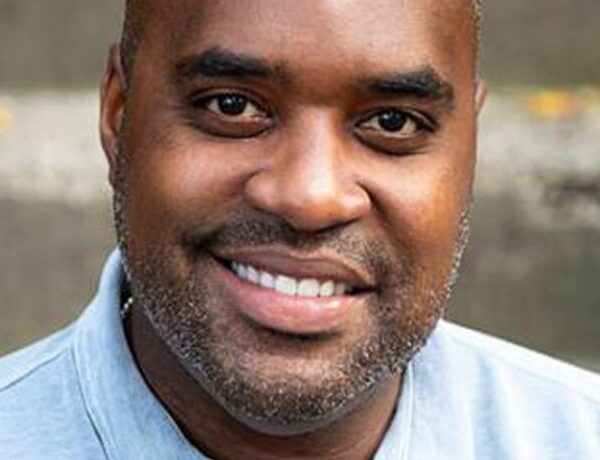
Kirk Brooks, one of the founders of Seaside Hockey, explains more about the organization

“Seaside Hockey was started three years ago, and the main mission was to make hockey more affordable,” Brooks said. “Also, we wanted to introduce hockey to new Canadians, new individuals, our motto is new to the game and new to the sport.”

Brooks says Seaside Hockey, which has sponsors like the Black Hockey Federation, Scotiabank,  407ETR and the GTHL, stresses the fundamentals to new players, especially skating.

“When a child enters the program, we ask them ‘Do you want to skate,’ ” Brooks said. “Once they learn to skate, we add hockey equipment like a stick, then quickly as possible we have them doing power skating drills, stick handling drills, puck handling drills, but were big believers on development.”

Playing minor hockey can have a fun experience and players often make new friendships along the way. It is also very much a family sport.

“I’m from Canada, I played hockey since I was about 13 years old,” Brooks said. “I played in a league for a bit, my son Nathaniel is a developmental coach for the Arizona Coyotes, my daughter Nyla is a skating instructor, my son Xavier still plays hockey, those are some of the reasons why I played the game because I am a hockey dude through and through.”

A few NHLers have worked with Brooks before such as Wayne Simmonds, Devante Smith-Pelly, Trevor Daley, and the Subban family.

To join Seaside Hockey, you can visit www.seasidehockey.ca and fill out the preregister form.

The post Seaside Hockey Helps Visible Minorities Play the Game appeared first on Elite Level Hockey.
Categories
Hockey

Gillian Apps Created Her Own Path

Have you ever thought about attending a college or university in a different country? About what opportunities those schools might bring to the table? About what path you might go down? 

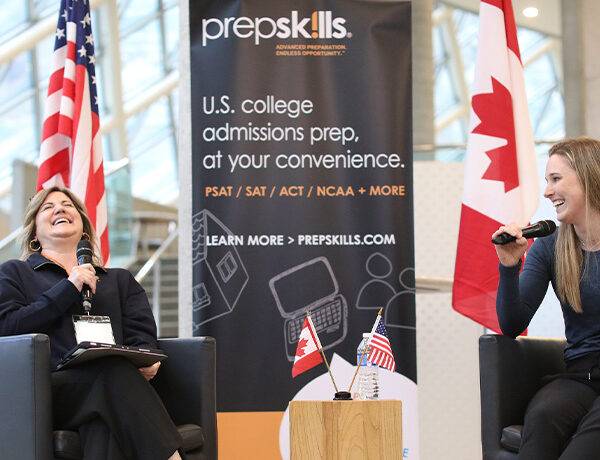
At the recent PrepSkills event April 20  at Roy Thomson Hall in downtown Toronto, high school student athletes were able to visit with staff from the different American schools that were attending the event. 

PrepSkills is an organization built to help Canadian students with their SSAT and SAT preparation as they seek admission to private and/or independent schools as well as U.S. colleges and universities. 

Former athletes such as Julian Jenkins and Gillian Mary Apps were speakers at the event. 

“Sports can be a great feature to drive your education,” said Jenkins, a former football player at Stanford, and currently the senior director of regional recruiting at NCSA. “Even if it’s not necessarily at your dream school, how bad do you want to be in sports?” 

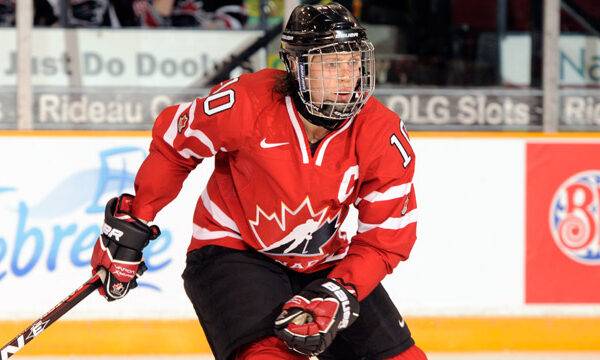
Apps, the granddaughter of Toronto Maple Leafs legend Syl Apps and daughter of former NHLer Syl Apps Jr., is a three-time Olympic hockey gold medalist for Canada. She grew up in Unionville, Ont., while she had several family members that have played sports at a high level, Apps made her own decision on where she wanted to go to university. 

“When it was time for me to go to university, I wanted to create my own path,” Apps said. “I went to Darthmouth College. For me, I wanted to go to the Ivy League.” 

Apps was inspired by watching her siblings play sports in the United States. 

“I went to Princeton to watch my brother play hockey, and I thought ‘Wow this is amazing,’ ” Apps said. “When it was time for me to go to apply for schools, I thought I could I see myself living here.” 

Apps, also a three-time IIHF world champion gold medalist, retired from international play in September 2015 with fifty goals and fifty assists in 168 international appearances. 

“People ask me what was the best Olympic, but its so hard to say,” Apps said. “I played in Torino in Italy which was my first Olympics. It was my dream came true. The second one was in Vancouver and not a lot of athletes get to represent your country as the host. The last one was in Russia, and I knew it would be my last Olympics.” 

Apps has a message to the young Canadian students going across the border. 

“Regardless of where you go, and where your education takes you, you know that Canada is always home,” said Apps, who stressed the importance of getting a post-secondary education. “For me, after I retired, right away I was so thankful that I had a degree to lean back on.” 

Amateur Hockey Scouting

The post Gillian Apps Created Her Own Path appeared first on Elite Level Hockey.
Categories
Hockey

U.S. College Expo for student athletes

Picking a post-secondary school can be exciting and challenging. There are schools across Canada that have a lot to offer. However, what if Canadian a student athlete wants to go to the United States to further their studies? What is the process? What are the requirements?

Prepskills can help fill in those blanks and it is holding a one-day U.S. College Expo event in Toronto on April 20th that allows parents and students to connect in person with U.S. college representatives.

“We have a number of American universities and colleges coming to Toronto to visit with families to help them understanding the U.S college admissions process,” said Joanna Severino, the Founder and President of Prepskills. “We want to let them know a little bit more about the programs, and the opportunities for Canadian students to study in the United States.”

Through their years of experience, Prepskills has built relationships with numerous educational and affiliate partners in both Canada and the United States. There are many American universities like University of Michigan, University of South Florida, and Western Kentucky that will attend the upcoming event at Roy Thompson Hall. 

Canadian students can explore the different colleges and universities that are offered at the event. 

“We actually try to keep it intimate” Severino said, “Having been a high school teacher myself, some students are going to be overwhelmed with trying to put them in a room with 200 universities.” 

Severino says Prepskills helps build relationships between students and parents, high school councillors, and athletic associations for athletes looking to go to the U.S. on a  scholarship. 

The main goal of the U.S. College Expo to help educate families that may not understand the college application process. 

“The American universities do take a wholistic approach,” Severino said. “What that means is they’ll look at the academic records from grades 9-12, which is unusual for a Canadian student who will apply locally and tend to focus on their grade 11 marks.”

Prepskills hockey scholarships in the U.S.

Student athletes however have an extra layer of complexity. Prepskills is dedicated to providing student athletes with tools required to satisfy the requirements of the NCAA Eligibility Center which is an organization that helps determine the eligibility of students to participate in college level sports in the United States. 

“As a student athlete, you may be a talented division one hockey player, but that won’t get you in,’’ Severino said. “You have to go through admissions and check off all the boxes when it comes to academics.” 

Severino mentions when it comes to the admission process for student athletes they would have to take account in eligibility for recruitment. 

“For example, the NCAA requiring the 16 core courses for admission, Severino said.” “That’s what the student athletes have to keep in mind.” 

The NCAA regulates all required student athletes to meet a prescribed level of performance while maintain their amateur status before entering a college or university. 

There have also been examples of NHL players using this preparation program like former Toronto Maple Leaf’s and current Edmonton Oilers left winger Zack Hyman. Severino says Hyman prepared very well and she had the pleasure working with his family and he went to the University of Michigan. 

Severino also mentions things to look out for in the upcoming event. 

“I think it’s important to take the time to examine each of the university options,” Severino said. “Were all custom to knowing the name brands and the university that stand out in our minds, but you’re going to find some hidden gems and that’s what we like to do with families because there some great college options like an Ivy League School.” 

Severino also mentions taking the time to listen to the guest speakers. 

Prepskills is a SAT and SSAT provider in Canada for students seeking to go to private or independent schools, colleges or universities south of the border.

There are several types of courses offered by Prepskills that are tailored to meet individual needs of students, maximizing their strengths, and improving areas of learning where they may be less proficient.

To learn more about then upcoming US College Expo or about Prepskills, visit their website at www.prepskills.com


Amateur Hockey Scouting

The post U.S. College Expo for student athletes appeared first on Elite Level Hockey.