Categories
Hockey

Gillian Apps Created Her Own Path

Have you ever thought about attending a college or university in a different country? About what opportunities those schools might bring to the table? About what path you might go down? 

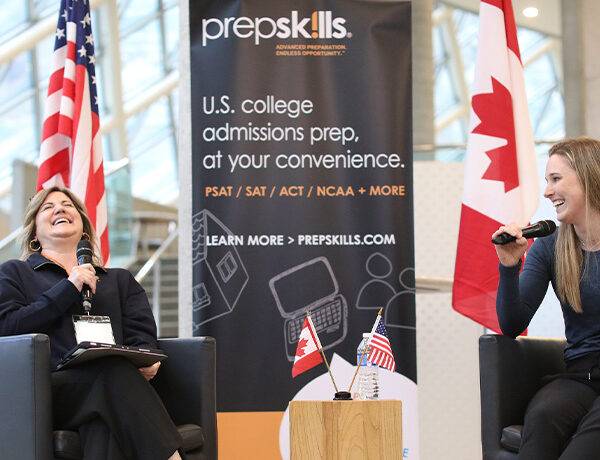
At the recent PrepSkills event April 20  at Roy Thomson Hall in downtown Toronto, high school student athletes were able to visit with staff from the different American schools that were attending the event. 

PrepSkills is an organization built to help Canadian students with their SSAT and SAT preparation as they seek admission to private and/or independent schools as well as U.S. colleges and universities. 

Former athletes such as Julian Jenkins and Gillian Mary Apps were speakers at the event. 

“Sports can be a great feature to drive your education,” said Jenkins, a former football player at Stanford, and currently the senior director of regional recruiting at NCSA. “Even if it’s not necessarily at your dream school, how bad do you want to be in sports?” 

Apps, the granddaughter of Toronto Maple Leafs legend Syl Apps and daughter of former NHLer Syl Apps Jr., is a three-time Olympic hockey gold medalist for Canada. She grew up in Unionville, Ont., while she had several family members that have played sports at a high level, Apps made her own decision on where she wanted to go to university. 

“When it was time for me to go to university, I wanted to create my own path,” Apps said. “I went to Darthmouth College. For me, I wanted to go to the Ivy League.” 

Apps was inspired by watching her siblings play sports in the United States. 

“I went to Princeton to watch my brother play hockey, and I thought ‘Wow this is amazing,’ ” Apps said. “When it was time for me to go to apply for schools, I thought I could I see myself living here.” 

Apps, also a three-time IIHF world champion gold medalist, retired from international play in September 2015 with fifty goals and fifty assists in 168 international appearances. 

“People ask me what was the best Olympic, but its so hard to say,” Apps said. “I played in Torino in Italy which was my first Olympics. It was my dream came true. The second one was in Vancouver and not a lot of athletes get to represent your country as the host. The last one was in Russia, and I knew it would be my last Olympics.” 

Apps has a message to the young Canadian students going across the border. 

“Regardless of where you go, and where your education takes you, you know that Canada is always home,” said Apps, who stressed the importance of getting a post-secondary education. “For me, after I retired, right away I was so thankful that I had a degree to lean back on.” 

Amateur Hockey Scouting
The post Gillian Apps Created Her Own Path appeared first on Elite Level Hockey.

Categories
Hockey

U.S. College Expo for student athletes

Picking a post-secondary school can be exciting and challenging. There are schools across Canada that have a lot to offer. However, what if Canadian a student athlete wants to go to the United States to further their studies? What is the process? What are the requirements?

Prepskills can help fill in those blanks and it is holding a one-day U.S. College Expo event in Toronto on April 20th that allows parents and students to connect in person with U.S. college representatives.

“We have a number of American universities and colleges coming to Toronto to visit with families to help them understanding the U.S college admissions process,” said Joanna Severino, the Founder and President of Prepskills. “We want to let them know a little bit more about the programs, and the opportunities for Canadian students to study in the United States.”

Through their years of experience, Prepskills has built relationships with numerous educational and affiliate partners in both Canada and the United States. There are many American universities like University of Michigan, University of South Florida, and Western Kentucky that will attend the upcoming event at Roy Thompson Hall. 

Canadian students can explore the different colleges and universities that are offered at the event. 

“We actually try to keep it intimate” Severino said, “Having been a high school teacher myself, some students are going to be overwhelmed with trying to put them in a room with 200 universities.” 

Severino says Prepskills helps build relationships between students and parents, high school councillors, and athletic associations for athletes looking to go to the U.S. on a  scholarship. 

The main goal of the U.S. College Expo to help educate families that may not understand the college application process. 

“The American universities do take a wholistic approach,” Severino said. “What that means is they’ll look at the academic records from grades 9-12, which is unusual for a Canadian student who will apply locally and tend to focus on their grade 11 marks.”

Prepskills hockey scholarships in the U.S.

Student athletes however have an extra layer of complexity. Prepskills is dedicated to providing student athletes with tools required to satisfy the requirements of the NCAA Eligibility Center which is an organization that helps determine the eligibility of students to participate in college level sports in the United States. 

“As a student athlete, you may be a talented division one hockey player, but that won’t get you in,’’ Severino said. “You have to go through admissions and check off all the boxes when it comes to academics.” 

Severino mentions when it comes to the admission process for student athletes they would have to take account in eligibility for recruitment. 

“For example, the NCAA requiring the 16 core courses for admission, Severino said.” “That’s what the student athletes have to keep in mind.” 

The NCAA regulates all required student athletes to meet a prescribed level of performance while maintain their amateur status before entering a college or university. 

There have also been examples of NHL players using this preparation program like former Toronto Maple Leaf’s and current Edmonton Oilers left winger Zack Hyman. Severino says Hyman prepared very well and she had the pleasure working with his family and he went to the University of Michigan. 

Severino also mentions things to look out for in the upcoming event. 

“I think it’s important to take the time to examine each of the university options,” Severino said. “Were all custom to knowing the name brands and the university that stand out in our minds, but you’re going to find some hidden gems and that’s what we like to do with families because there some great college options like an Ivy League School.” 

Severino also mentions taking the time to listen to the guest speakers. 

Prepskills is a SAT and SSAT provider in Canada for students seeking to go to private or independent schools, colleges or universities south of the border.

There are several types of courses offered by Prepskills that are tailored to meet individual needs of students, maximizing their strengths, and improving areas of learning where they may be less proficient.

To learn more about then upcoming US College Expo or about Prepskills, visit their website at www.prepskills.com


Amateur Hockey Scouting

The post U.S. College Expo for student athletes appeared first on Elite Level Hockey.

Categories
Axe Throwing Baseball Basketball Clubs Coaches Hockey Lacrosse Soccer Softball Tournaments Volleyball

Downtime At A Tournament? What To Do!

Read the latest from Travelsports
Downtime at a Tournament? What to Do!
Hey Travelsporters!

Good luck to everyone who is playing at Memorial Day tournaments this weekend. Thank you to all who have served as we remember and honor those who have fallen.

– Team Travelsports

What to do with your downtime during a tournament?

During downtime when traveling to a youth sports tournament, it’s important to keep the team engaged and make the most of the experience.

Here are some suggestions for activities during your teams downtime:

Relaxation and Recreation: Downtime is a great opportunity for relaxation and recreation. Consider activities like swimming, playing games, or simply enjoying some leisure time at the hotel. Some hotels may offer recreational facilities like a pool, gym, or outdoor spaces that can be utilized for team activities.

Sightseeing and Exploration: Take advantage of the opportunity to explore the tournament’s host city or nearby attractions. Visit local landmarks, museums, parks, or other points of interest. It can be both educational and fun for the team.

Team Meetings and Strategy Sessions: Utilize the downtime for team meetings to discuss game strategies, review performances, or plan for upcoming matches. This can be an excellent opportunity for coaches and players to communicate, set goals, and make adjustments.

Volunteer or Community Service: Engage the team in a volunteer or community service activity. Look for local organizations or initiatives that may need assistance. It not only provides a valuable learning experience but also promotes a sense of giving back.

Cultural and Educational Activities: Research the local culture and history of the tournament’s location. Plan visits to cultural centers, historical sites, or museums that can provide insights into the local heritage. It can be an educational experience for the team.

Team Dinners or Social Events: Arrange team dinners or social events during downtime. This can be a fun way to celebrate accomplishments, build team spirit, and enjoy local cuisine together. Look for nearby restaurants or consider organizing a potluck or BBQ at a suitable location.

Rest and Recovery: Downtime is also essential for rest and recovery, especially for young athletes. Make sure to prioritize downtime for relaxation, proper sleep, and rejuvenation. Encourage team members to take care of their physical and mental well-being.

Group Activities and Games: Plan group activities or games that promote interaction and fun. This could include card games, board games, team challenges, or outdoor activities like a scavenger hunt. Engaging in recreational activities can boost team morale and create lasting memories.

Watch Other Matches: If there are other games happening during the tournament, consider watching matches of other teams. This can provide an opportunity to observe different playing styles, strategies, and learn from other athletes’ performances.

Remember to balance downtime activities with the tournament schedule and the need for rest. It’s important to create a mix of fun, relaxation, team-building, and preparation to make the most of the overall experience.

2023 Trending Tournaments

Check out the top trending tournaments, by sport, on our site!

Baseball

Travel Ball USA Memorial Day Classic
All American Open
2023 PG West Memorial Day Classic
Cooperstown Dreams Park Tournament

Softball

PGF Atlanta Fastpitch Memorial Day Classic
National Junior College Athletic Association (NJCAA) Div I Softball World Series
Lexi Kretsch Summer Showdown

Hockey

Kings of Spring Nashville
Montreal Meltdown AAA Hockey Tournament
Ponytail Challenge Hockey Showcase

Lacrosse

NCAA DI Women’s Lacrosse Championship
The Ohio Lacrosse FestivalSummer
Genesis Lacrosse Tournament

Sports for a Cause!

Buddy Baseball is a program designed for children ages 7 to 22 with various learning and/or physical disabilities. Buddy volunteers are comprised of teens and young adults. It’s a great program – find a local one near you! Here is an example of a local program in Wilmette, IL.

DID YOU KNOW??

Did you know that Travelsports’ tournament and facility pages have a section on What to Do that are near the location of the tournaments and facilties? If your team has some downtime and is looking for something to do, make sure to check the “What to Do” section on tournament & facility pages.

“What to Do”
Bowling Alleys
Batting Cages
Mini-Golf

And More!

MARKETPLACE
Don’t forget to check out our Marketplace!

We want to highlight an online marketplace that has joined Travelsports. Be sure to click on their name to check out their store on Travelsports.


Sports Plus We developed Sports Plus as a way to introduce meaningful hockey ideas to parents outside the big box stores. Our first product, Heads Up Head Safe™ embodies our love of the game and caring for the players’ safety. Our second product, The Drying Twig comes from our kids constantly leaving their wet equipment in a pile on the floor at home and on a tournament. Made in the USA is a big plus with us and a lot of people we speak with and that is why we are bringing this to you.

We are proud supports of The Wounded Warrior Project and The Long Island Warriors Veterans Hockey Club.

ADVERTISING
Interested in advertising on our newsletter? Send us a note to info@travelsports.com


Categories
Hockey

Top Hockey Academies Across Canada

NAX_large

Northern Alberta Xtreme

Location: Edmonton
Head Coach: Jason Stewart

About The Program: The Northern Alberta Xtreme (NAX) was launched in 2013 by Jason Stewart. Initially, the program consisted of just one team, the Female Midget Preps. But as the program began to expand, more teams were added to meet the demands at each level. In 2015, the Elite 15s team was added, winning the league title in their first season. The following season would see the launch of the Male Midget Prep team, while the Female Midget Preps would join them in the Canadian Sport School Hockey League (CSSHL). In 2017-18, the Male Bantam Prep team was added, bringing the program to its current status of four teams competing in the CSSHL.

Notable Alumni: Luke Prokop, Michael Benning, Carter Savoie, Ethan Edwards, Connor McClennon.

For More Information: https://www.naxhockey.com/

EdgeSchool_logo

Calgary Edge

Location: Calgary
Head Coach: James Poole

About The Program: Founded in 1999, the Edge School offers training in dance, golf, hockey, soccer, figure skating, basketball, and a flex program for students who would like to pursue a sport other than those currently offered. Edge follows a three-sphere philosophy – academics, athletics and character development of students – which aims to prepare students for either post secondary education or a career in their chosen sport.

Notable Alumni: Tyler Myers, Matt Dumba, Taro Hirose, Thomas Hickey, Jake Bean.

For More Information: https://edgeschool.com/

Looking for Academies in Ontario?

Okanagan Hockey Academy

Main Location: Penticton, B.C.
Head Coach: Craig Bedard

About The Program: The Okanagan Hockey Group was founded by Larry Lund in 1963. The primary focus of the Okanagan Hockey Academy is to promote the long-term development of each of their athletes in the classroom, on the ice, and in the community. Putting young, motivated people in a structured environment, surrounded by a world class staff and support system, they believe allows them to deliver a consistent message and value system. They hold their student athletes accountable on their efforts, attention to detail, and above all their attitude. The Okanagan Hockey Group has expanded its reach in recent years, opening Academies in Edmonton and Whitby, Ont.

Notable Alumni: Curtis Lazar, Joe Hicketts, Michael Rasmussen.

For More Information: https://www.okanaganhockey.com/

Rink Hockey Academy

Location: Winnipeg/Kelowna, B.C.
Head Coach: Rob Smith (Winnipeg)/Shae Naka (Kelowna)

About The Program: Offering programs in both Winnipeg and Kelowna, the Rink Hockey Academy provides competition for four teams – U15 Prep, U16 Prep, U18 Prep and U18 Female Prep, all of which compete in the CSSHL. The RHA student-athletes’ school day will be modified to allow maximum time for school and training needs. The teams will travel and compete mostly outside the province at the highest levels on both sides of the border during the full school year. School-board appointed team liaisons ensure players meet minimum standards and academic readiness for post secondary applications and career choices.

Notable Alumni: Justin Schultz, Seth Jarvis, Matthew Thiessen.

For More Information: https://www.rinkhockeyacademy.ca/

Burnaby WC Logo

Burnaby Winter Club

Location: Burnaby, B.C.
Head Coach: Mike Santorelli

About The Program: The Burnaby Winter Club (BWC) was founded on May 29, 1956 as the Burnaby Curling Club and incorporated under the Societies Act of the Province of British Columbia. On April 18, 1958 the Club changed its name to reflect the multi-sport dynamics of the activities at the time. It became the Burnaby Winter Club and its constitution was amended to include hockey and figure skating. Over more recent years, with the success of the Vancouver Canucks, hockey has become the predominant sport at the club.

Notable Alumni: Ryan Nugent-Hopkins, Mat Barzal, Karl Alzner, Jack McIlhargey, Cliff Ronning, Paul Kariya, Chris Joseph, Glenn Anderson.

For More Information: https://www.burnabywinterclub.com/

The post Top Hockey Academies Across Canada appeared first on Elite Level Hockey.
Categories
Hockey

Food Tips for Hockey Road Trips

Road trips and hotel stays are increasingly common today for all levels of hockey — especially during tournament season. While sports travel is exciting, it definitely brings new challenges to fuelling athletes. Finding good restaurants in unfamiliar cities can be difficult and dining out for every meal gets expensive quickly.

Even if you don’t want to travel with a crockpot or portable grill, here are seven simple ways to make fuelling on the road convenient and easier on the wallet.  

Pack Snacks

Whether it’s pre-packaged granola bars or homemade trail mix, bringing an assortment of nutrient-dense snacks helps avoid overpriced concession stands and convenience stores for the post-workout refuelling window or travel delays.

Large Water Jugs

Traveling by car? Skip the cases of plastic bottles and save cargo room (and the environment!) with gallons of water to refill reusable bottles.

Peanut Butter and Jam

Pre-game meal timing often happens while on the road. Instead of settling on less-than-ideal fast food, pack bread, nut butter, and jelly to make sandwiches in the car (turkey is a great option also, but then you have to take coolers into account too). Sandwiches are also perfect for the hotel room or post late-night games for athletes that are hungry again before bed. 

Hit the Market

Refrigerator in the room? Stop by a local grocery store for yogurt, fresh fruit, salad, and/or rotisserie chicken. Grab some milk if your player enjoys cereal before early morning games.

Add Hot Water

Hotel room coffee makers or microwaves make oatmeal and quinoa cups a convenient nutrient-dense pre-game fuel.

Portable Blender

If smoothies are a favorite, rechargeable portable blenders are a great option for early mornings or the post-game refuelling window. They can also be repurposed for fun, adult drinks later in the night!

Pre-made Meals

Packing a cooler? Make and freeze breakfast sandwiches, egg cups, or quesadillas to reheat in the room microwave.

Most parents are tired of paying for restaurant food between games at tournaments and want to avoid feeding their player fast food that does nothing to improve their performance.

A little pre-travel food preparation minimizes the stress of last-minute fuelling between games. Planning ahead also ensures your skater has nutrient-dense options to maintain endurance and support recovery throughout the long weekend.

Need a travel fuel checklist? Looking for freeze-ahead meal recipes? Visit  RockPerformance.net to learn more.

The post Food Tips for Hockey Road Trips appeared first on Elite Level Hockey.

Categories
Hockey

Hockey Scouts Discuss CHL vs. NCAA Routes

In this series on amateur hockey scouting, we compiled responses from 20 different hockey scouts and coaches that scout representing NHL, OHL, CJHL and NCAA teams about their unique job. Many wished to remain anonymous, which we allowed in order to get more candid responses to our questions.
These hockey scouts come from varying backgrounds, ranging from former players — from the NHL, junior and college ranks — to former coaches, including some with limited hockey playing experience. Believe it or not, there is even a former referee. Some have been a hockey scout for over 30 years and others only a couple.

By PUCK CHASER

Hockey scouts have interesting perspective when it comes to debating the Canadian Hockey League or an NCAA school and possible scholarship as the route to go.

Traditionally the best players in the world are choosing the CHL route, but that is definitely changing.

Over 30% of the NHL is coming from the NCAA now. A majority of those players are American but we are starting to see some elite Canadian prospects make that decision to play NCAA hockey.  

Cale Makar and Alex Newhook are the most notable players to play NCAA hockey recently.

“Some NHL scouts have confided to me that they think the NCAA is now the best amateur league in the world,” said one NCAA coach. “Most of that has to do with the number of older players in the league, but also the influx of high end talent deciding to go that route.

“If an 18 year old can thrive in that NCAA environment, there is a very good chance he will translate to pro very well.” 

Most of that discussion surrounds the speed of the NCAA game. The older, more mature players create a very pro style compared to CHL, which is composed of 16-to-20-year-old players.

A former NHL coach said, “Both are wonderful options. Traditionally, the NCAA was for the so-called “late bloomers” while the CHL tended to cater towards the higher end, instant impact players.

“This thinking has changed for the better as both routes cater to all types of players. It is largely based on a players interest, opportunity and finding the ideal situation for the player and the person.” 

Both leagues are heavily scouted. The one major difference is that as a young Canadian player you cannot play in the CHL before choosing the NCAA route. This forces players to play in the CJHL or the USHL before attending school. 

Although the CJHL and  USHL are scouted, players are often undervalued and taken in later in the draft. 

“It is true, we see players either slide down in the draft or get taken in their second year of eligibility because they chose the NCAA path versus the CHL path,” said one scout.

Many scouts confirmed these thoughts as they found it more difficult to compare a player playing in those Tier 2 junior leagues.

There are more intangibles at play and it’s difficult to compare players from one league to another, not to mention that there are fewer views of these players in these leagues. 

“This possibility of being drafted later than expected is one aspect Canadian players must realize when they choose this route,” said one scout. “The upside for these Canadian NCAA players is that they end up getting a little more time to develop and often get second chances through free agency.”

The scout went on to say, “NHL teams like taking NCAA players — especially middle rounds — as they are investments that they do not have to spend money on as soon as compared to a CHL player.

“When you draft a CHL player, decisions on signing that player need to be made much sooner.”

Amateur Hockey Scouting

The post Hockey Scouts Discuss CHL vs. NCAA Routes appeared first on Elite Level Hockey.

Categories
Hockey

Cal Foote’s Hockey Hero

Every day – usually around lunchtime – Cal Foote gets a text from his hockey hero.

While almost all youth hockey players will pick out an NHLer to emulate, to admire, or simply to worship while watching them excel on the ice, few are ever lucky enough to meet, let alone get to know their idol.

In Foote’s case, he interacted with his idol on a daily basis and continues to do so to this day. That’s because his hockey hero is his dad, former NHL defenseman Adam Foote.

“I was young when I watched him play, and that was all I wanted to do when I grew up,” Tampa Bay Lightning defenseman Cal Foote said of his dad. “Whenever he was out there, whenever he was playing I was always watching him to see what he was doing.”

In 2019-20, Adam Foote coached the Western Hockey League’s Kelowna Rockets. Among his players on that squad was his younger son Nolan Foote, today a player in the New Jersey Devils system.

Cal might not have benefitted from his father’s coaching, but the sage advice offered by a father who played 1,154 games over 20 seasons at the same position as Cal is never far away.

Even today, he still turns to his dad for advice.

“I always get that text message before the game, giving me a few pointers,” Cal said. Sometimes, it’s simple, straightforward message such as move your feet. On other occasions, the text can come with a video attached, often featuring diagrams on a white board, as well as clips of NHL players executing the described play properly.

Cal putting his dad in the unique position of cheering against the team with which he won both of his Stanley Cups, the Colorado Avalanche. Colorado and Tampa Bay squared off in the 2021-22 Stanley Cup final, with dad’s old team winning in six game.

Adam Foote won Stanley Cups with the Avalanche in 1995-96 and 2000-01.

Born in 1998, Cal wasn’t around for his dad’s first Cup win and can’t really recall the second one.

“I want to say I remember the ’01 Cup, but I don’t,” Cal Foote told The Athletic. “All I really remember about playoff time in Colorado was that they have the white pom-poms. I used to love playing with those and cheering him on.”

The post Cal Foote’s Hockey Hero appeared first on Elite Level Hockey.

Categories
Hockey

What To Do In Cases of Abuse

While sport is often considered to be a safe, healthy environment that contributes to the positive development of young people, it is also an area where violence can manifest itself in various ways, including sexual assault.

“The studies we currently have at our disposal show that between two and eight per cent of minor age athletes are victims of sexual abuse within the context of sport,” states a report on Sexual Abuse of Young People in Sport by the National Institute of Public Health of Quebec.  “To date, available statistics have shown that most of the victims of sexual abuse in sport are young female athletes, although a large proportion of boys are also victimized.

“Researchers have noted that young people who have been sexually abused in the context of sport often have low self-esteem, strained relationships with their parents, and eating disorders. In addition, they are often high performance athletes.”

It is essential to not tolerate behaviour in sport that would be considered unacceptable in other contexts, such as day-care centres or schools, continues the report.

“Parents can also play a role in prevention by finding out what preventative measures are in place in the organization their child attends and by choosing sports organizations that give priority to the well-being of young people.” 

The decision to report to law enforcement is entirely yours, states Erinn Robinson, director of media relations, Rape, Abuse & Incest Network (RAINN). 

“Some survivors say that reporting and seeking justice helped them recover and regain a sense of control over their lives,” says Robinson. “Understanding how to report and learning more about the experience can take away some of the unknowns and help you feel more prepared.”

RAINN notes several options for reporting sexual assault:

  • Call 911. If you are in immediate danger, dial 911. Help will come to you, wherever you are.
  • Contact the local police department. Call the direct line of your local police station or visit the station in person. If you are on a college campus you may also be able to contact campus-based law enforcement.
  • Visit a medical center. If you are being treated for injuries resulting from sexual assault, tell a medical professional that you wish to report the crime. You can also choose to have a sexual assault forensic exam. 

To learn more about the options in your area of the United States, call the National Sexual Assault Hotline at 800.656.HOPE (4673). You’ll be connected to a staff member from a local sexual assault service provider who will walk you through the process of getting help and reporting to law enforcement at your own pace.

In most areas, there are specific law enforcement officers who are trained to interact with sexual assault survivors. Service providers can connect you to these officers, and might also send a trained advocate to accompany you through the reporting process.

There is no limitation on when a victim can report a crime to police, notes information from RAINN. However, in many states, there is a limitation on when charges can be filed and a case can be prosecuted. This is called the statute of limitations and varies by state, type of crime, age of the victim, and various other factors. 

Anyone affected by sexual assault, whether it happened to you or someone you care about, can find support on the National Sexual Assault Hotline. You can also visit online.rainn.org to receive support via confidential online chat.

For more information on the telephone and online hotlines, visit https://www.rainn.org/about-national-sexual-assault-telephone-hotline and https://www.rainn.org/about-national-sexual-assault-online-hotline

Trained counsellors with Childhelp are available to talk through child abuse situations. The Childhelp National Child Abuse Hotline can be contacted in the United States or Canada by telephone, texting or online chat. The number is 1-800-4-A-CHILD )1-800-422-4453. Further information, and online chat, is available at childhelphotline.org.

Kids Help Phone is Canada’s only 24/7 e-mental health service offering free, confidential support to young people in English and French. The Peer-to-Peer Community at Kids Help Phone is a bilingual, online, mental health support forum available across Canada. In the community, youth can anonymously share their personal experiences, offer inspiration and ask questions to connect, comfort and cheer each other on.

To contact Kids Help Phone, call 1-800-668-6868, visit www.kidshelpphone.ca, text CONNECT to 686868 or connect through Facebook Messenger at KidsHelpPhone.ca/Messenger. If you or someone you know is in immediate danger, contact 911 or the emergency services in your area right away.

The post What To Do In Cases of Abuse appeared first on Elite Level Hockey.

Categories
Hockey

Signs Your Player is Possibly Being Abused

It will never happen to my kid … until it does.

Child abuse occurs at every socio-economic level, across ethnic and cultural lines, within all regions and at all levels of education. Studies indicate that 40 to 50 per cent of athletes have experienced anything from mild harassment to severe abuse, according to Childhelp.

What if my child doesn’t tell me that they are being abused? Are there indicators I should be looking out for in my kid’s behaviour?

The Childhelp Speak Up Be Safe for Athletes prevention education program notes indicators of possible abuse in sports include, but are not limited to, missing practices, illness, loss of interest, withdrawal, and a child performing significantly below his or her abilities. 

“Look for signs of disengagement in young people,” Daphne Young, chief communications officer at Childhelp, said. “They used to be so excited about their sport and couldn’t wait to go to practice and now they’re pulling back or want to quit.

“Watch for slippage in grades, change in physicality, whether they’re covering up more, eating more, or starving themselves. There could be a withdrawal or withholding of engagement or you may see the flip side and see a child exuberantly happy, super engaged, super thrilled and very secretive because there’s a new love in their life, not understanding that this could be an older person taking advantage.

“Watch for dramatic shifts in behaviour and try to ensure that you ask questions without being accusatory.”

Young says Speak Up Be Safe for Athletes was started because there was a specific need for it.

“This is a specialized audience and it needs its own niche prevention because we know that predators are going to crystalize around places where they have access to children and coaches, I believe, are second only to educators in gaining that close relationship and occasionally abusing it,” Young said. 

In October, Childhelp will be launching a specialty version of their hotline, called the Courage First Athletes Help Line, in partnership with the Foundation for Global Sports Development, to help protect children in sports.

Counsellors working the hotline will be specially trained to deal with issues in youth athletics. In the meantime, the Childhelp National Child Abuse Hotline can be contacted in the United States or Canada by telephone, texting or online chat. The number is 1-800-4-A-CHILD ) 1-800-422-4453. Further information, and online chat, is available at childhelphotline.org.

It’s not always easy to spot sexual abuse because perpetrators often take steps to hide their actions, says Erinn Robinson, director of media relations, Rape, Abuse & Incest Network (RAINN).

The most important thing to keep in mind when looking for signs of child sexual abuse is to keep an eye on sudden changes in your child’s behaviour, says Robinson.

“Trust your gut and don’t ignore your feelings if something seems off. If a child tells you that someone makes them uncomfortable, even if they can’t tell you anything specific, listen.”

RAINN lists the following as warning signs to watch for:

Physical Signs

Behavioral Signs

  • Excessive talk about or knowledge of sexual topics
  • Keeping secrets or not talking as much as usual
  • Not wanting to be left alone with certain people or being afraid to be away from primary caregivers, especially if this is a new behavior
  • Regressive behaviors or resuming behaviors they had grown out of, such as thumb sucking or bedwetting
  • Overly compliant behavior
  • Sexual behavior that is inappropriate for the child’s age
  • Spending an unusual amount of time alone
  • Trying to avoid removing clothing to change or bathe

Emotional Signs

  • Change in eating habits
  • Change in mood or personality, such as increased aggression
  • Decrease in confidence or self-image
  • Excessive worry or fearfulness
  • Increase in unexplained health problems such as stomach aches and headaches
  • Loss or decrease in interest in school, activities, and friends
  • Nightmares or fear of being alone at night
  • Self-harming behaviors

Canada’s Kids Help Phone offers tips on what to do if a young person comes to you to discuss an abusive situation.

These tips include listening without judgment and keeping the line of communication open by letting the young person know they can talk to you about anything and staying calm. If a young person discloses a potentially harmful situation to you, get help for them right away. If they are in immediate danger, call 911 or the emergency services in your area. You may also have a duty to report child abuse or neglect to your local child protection services. 

Kids Help Phone is a resource that can connect young people with crisis responders. To contact Kids Help Phone, call 1-800-668-6868, visit www.kidshelpphone.ca, text CONNECT to 686868 or connect through Facebook Messenger at KidsHelpPhone.ca/Messenger. 

 RAINN’s National Sexual Assault Hotline 800-656-HOPE (4673) connects callers in the United States with trained staff members from sexual assault service providers in their area and online.rainn.org connects to one-on-one chats with trained RAINN support specialists 24/7.

The post Signs Your Player is Possibly Being Abused appeared first on Elite Level Hockey.

Categories
Hockey

How to Spot A Possible Predator At The Rink

It is time to talk about something uncomfortable and often inconceivable — sexual abuse in minor hockey.

Keeping children safe can be challenging because many perpetrators who sexually abuse children are often in positions of trust. According to the Rape, Abuse & Incest Network (RAINN), 93% of child sexual assault victims know the perpetrator. 

The difficult part is these abusers often blend in and are often impossible to spot until it is too late.

For example, the National Institute of Public Health of Quebec, in a report on Sexual Abuse of Young People in Sport, states that an analysis of 159 cases of sexual abuse in sport reported in the print media revealed that the perpetrators of the abuse were coaches, teachers and instructors in 98% of the cases.

So are there any signs that a coach or trainer may be a predator?

RAINN advises to be cautious of an adult who spends time with children and exhibits the following behaviours:

  • Does not respect boundaries or listen when someone tells them no
  • Engages in touching that a child or child’s parents/guardians have indicated is unwanted
  • Tries to be a child’s friend rather than filling an adult role in the child’s life
  • Does not seem to have age-appropriate relationships
  • Talks with children about their personal problems or relationships
  • Spends time alone with children outside of their role in the child’s life or makes up excuses to be alone with the child
  • Expresses unusual interest in child’s sexual development, such as commenting on sexual characteristics or sexualizing normal behaviors
  • Gives a child gifts without occasion or reason
  • Spends a lot of time with your child or another child you know
  • Restricts a child’s access to other adults

NHLPA member and Boston Bruins great Patrice Bergeron has talked about the importance of reaching out.

“Sometimes you don’t want to share things with those you are closest to, your parents, siblings or friends,” Bergeron said through a Kids Help Phone statement. “I think having someone to hear you out, someone who is there for you and understands what you’re going through, that’s very important. It’s not easy to talk and ask for support, but people are always there to help you.”

Young people in the United States who need help processing an abusive relationship can call the National Sexual Assault Hotline at 800-656-HOPE (4673) to be connected to a staff member from a local sexual assault service provider who will walk them through the process of getting the help they need.

Contacting a hotline to discuss concerns or ask questions can be done by means of a telephone call, text or online chat.

“What we have discovered for example, with texting, is that we got way more young women who were more comfortable texting us than we expected, and with chat we discovered that a lot more gender fluid children would feel comfortable talking to us via chat,” says Daphne Young, chief communications officer at Childhelp. “So, we’ve really changed through technology for young people in the modes that they’re most comfortable with.”

Young cautions children and teens to look for “that icky feeling in your stomach” where you may not have words for it but the actions that someone takes makes you feel awkward, weird, or uncomfortable.

“You probably feel completely alone in this moment, like you’ve done something wrong or brought this on yourself,” Young says, appealing to the victims of abuse who are hesitant to seek help. “What you don’t realize is that usually a predator has hundreds of victims in a lifetime, if not more, and so the step you take to seek help not only will keep you safe but it will potentially align you with others who have come forward.

“The Childhelp National Child Abuse Hotline (1-800-4-A-CHILD, 1-800-422-4453) is completely anonymous. No one can find you. No one can do a reverse search or force you to take any action. They’re just going to give you every resource possible, all the support you need, therapeutic opportunities, people to talk to who will back you up in your community, and anything you need to help you through the process. So, I would say, just make the call, or text, or chat. If you don’t want anyone else to hear then give is a text message and let us know and we’ll take care of you.”

Many communities have sexual assault or crisis lines that allow people to talk to someone about what they’re feeling. You can also talk to family, friends, teachers, counsellors or someone else you trust.

Canada’s Kids Help Phone (1-800-668-6868) notes the following as some of the ways to identify an adult who is safe to talk to:

  • Thoughtful: The person actively listens to you and believes you when you tell them something.
  • Trustworthy: The person is dependable, a confidant and someone you feel comfortable talking to.
  • Respectful: The person is mindful and considerate of your feelings and your boundaries.
  • Helpful: The person provides guidance and helps you find solutions to problems.
  • Caring: The person does what’s best for you, puts you first and cares about your mental and emotional wellbeing and physical safety.

The post How to Spot A Possible Predator At The Rink appeared first on Elite Level Hockey.