Categories
Restaurants

Favorite Fairbanks-Area Team Friendly Restaurants & Attractions

Let us know which restaurants and attractions are your favorites and add ones we have missed!

Alaska – Fairbanks Area Favorite Restaurants

Pump House Restaurant & Saloon
Brewsters
Big Daddy’s Bar B-Q Banquet Hall
Pike’s Landing
Hoo Doo Brewing Company
Shogun Hibachi

Alaska – Fairbanks Area Favorite Attractions

University of Alaska Fairbanks hockey game
Fairbanks Ice Dogs hockey game
Black Spruce Dog Sledding
Alaska Railroad
Alaska Wildlife Guide – ice fishing
Fairbanks Pioneer Museum and Big Stampede Show
Northern Lights Adventure
Running Reindeer Ranch

Categories
Restaurants

Favorite Anchorage-Area Team Friendly Restaurants & Attractions

Let us know which restaurants and attractions are your favorites and add ones we have missed!

Alaska – Anchorage Area Favorite Restaurants

Sullivan’s Steakhouse
49th State Brewing Company
Benihana
Simon & Seafort’s
Rustic Goat
The Blue Line Pub & Café
Crossbar
Matanuska Brewing
Seward’s Folly Bar & Grill
Dave & Buster’s
Chuck E Cheese

Alaska – Anchorage Area Favorite Attractions

University of Alaska – Anchorage hockey game
Alaska Railroad
Alaska Wildlife Conservation Center
Portage Glacier
Dave & Buster’s
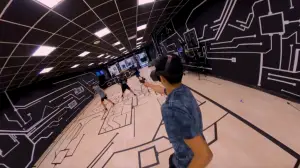
Vortex VR
Putter’s Wild
Chuck E Cheese
Shockwave Trampoline Park

Categories
Restaurants

Favorite Rochester-Area Team Friendly Restaurants & Attractions

Let us know which restaurants and attractions are your favorites and add ones we have missed!

Minnesota – Rochester Area Favorite Restaurants

BB’s Pizzaria
Bleu Duck
Buffalo Wild Wing
Dooley’s Pub
Fat Willy’s Grill & Bar
Four Daughters Winery
Olive Garden
Pescara
Terza
Valentino’s
Whistle Binkies Olde World Pub
Wildwood Sports Bar & Grill

Minnesota – Rochester Area Favorite Attractions

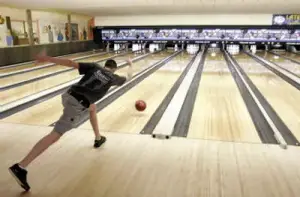
Bowlocity Entertainment Center
Quarry Hill Nature Center
Rochester Games and Arcade
The Escape Challenge
Unraveled Escape Room

Categories
Restaurants

Favorite Minneapolis-Area Team Friendly Restaurants & Attractions

Let us know which restaurants and attractions are your favorites and add ones we have missed!

Minnesota – Minneapolis Area Favorite Restaurants

Portillos
Buca di Beppo
Cowboy Jacks
Mickey’s Diner
Carbones
Matt’s Bar
The Blue Door Pub
5-8 Club
The Nook

Minnesota – Minneapolis Area Favorite Attractions

Water Parks of America
The Fun Lab
Bowlero
X Golf
Running Aces
Top Golf
Grand Slam
Conquer Ninja Warrior
Whirleyball
Urban Adventure Park
Mall of America
Bauer store
Wild Hockey game

Categories
Restaurants

Favorite Duluth-Area Team Friendly Restaurants & Attractions

Let us know which restaurants and attractions are your favorites and add ones we have missed!

Minnesota – Duluth Area Favorite Restaurants

Fotgjers Brew House
Corktown Deli & Brews
Duluth Grill
Ursa Minor Brewing
Anchor Bar
Little Angie’s
Betty’s Pie
OMC
Grandmas
Vintage Italian Pizza
King of Creams

Minnesota – Duluth Area Favorite Attractions

Zenith Adventure – Padd Board tours
Canal Park
Enger Tower
Brighton Beach
Amnicon Falls State park
Glensheen Mansion tours
Spirit Mountain
Great Lakes Aquarium
Gooseberry Falls Park

Categories
Restaurants

Favorite Grand Rapids/Holland-Area Team Friendly Restaurants & Attractions

Let us know which restaurants and attractions are your favorites and add ones we have missed!

Michigan – Grand Rapids/Holland Area Favorite Restaurants

84th St Pub and Grille (Grand Rapids)
Anna’s
Bam! Entertainment Center
Boatwerks
Buffalo Wild Wings
Captain Sundae (ice cream)
Curragh Irish Pub
Goog’s Pub & Grub
Hop Cat
New Holland Brewing Company
Pepinos
Sharkees

Michigan – Grand Rapids/Holland Area Favorite Restaurants

Bam! Entertainment Center
Craig’s Cruisers
Holland State Park
Lake Michigan
Nelis’ Dutch Village
Tunnel Beach and Park

Categories
Hotels

Hotels on Travelsports.com

Looking to increase your bookings from sports teams … Travelsports has you covered!

With 2 Million page views on Travelsports.com in 2021, listing your hotel on Travelsports gets your hotel in front of thousands of clubs/teams and tournaments looking to book rooms.

By listing your hotel on Travelsports, your hotel receives the following benefits:

  • A dedicated page on Travelsports which allows parents/teams/clubs and tournaments to discover your hotel, and contact/book rooms directly through you. Revenue
  • Additional exposure with your hotel featured on other Travelsports pages (tournaments, rinks, clubs, etc. near your hotel) which collectively receive thousands of page views per month. Advertising
  • Monthly statistics which allows you to easily and quickly determine how your hotel listing is performing on Travelsports. Return on Investment (ROI)

Travelsports is not a booking site or travel agency and does not receive commissions or rebates.

The cost for listing your hotel is $25 per month per hotel.

It’s easy to get started, simply click on the following link and add your hotel: https://travelsports.com/business/claim/hotel-operator

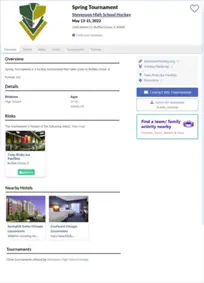
Tournament Hotel Listing Example

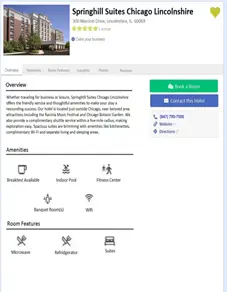
Hotel Listing Page Example

Monthly Statistics

Get started here: https://travelsports.com/business/claim/hotel-operator

Categories
Hockey

Does Your Child Have The Right Stick?

As your child grabs their hockey stick out of the back of your vehicle, you may not be thinking about how important this piece of equipment is. Sure, you put decent consideration into their skates, helmet and the other equipment that protects them, but what about their stick?

Many parents think that buying an inexpensive stick is good enough for a youth hockey stick. After all, “A cheap stick would be good enough for any young player” you think.  In reality your player, no matter his or her level, needs a quality youth hockey stick in order develop the fundamentals of hockey.

So what does a parent look for when getting the right stick? There are several factors to consider when looking for the best youth hockey sticks. Youth players usually are players between the ages of 4 and 10, but really it depends on the size of the child.

When it comes to looking for a stick, you will need to think about the material, length, flex, weight, as well as what you need the stick to do for your young player.

Material Matters

While wood was once the only choice for hockey stick material, in the past 20 years, a lot of great technical improvements have been made. These days, best hockey sticks are not just made up of a single material, but are instead comprised of several.

The most popular, and best, material that you should choose for a youth hockey stick is composite. Composite can be made up of several different materials, from heavy plastic to titanium. Even Kevlar is used in composite sticks because it is so strong and reliable. Regardless of the exact make-up, composite is more durable and lighter than other options which is great for younger kids.

Length

The length of your youth hockey stick will affect your ability to control the puck, your reach, and your shots. The length will also affect how you receive and pass. For young players, a mid-length stick would be the most appropriate to learn good stick handling.

The average length for a junior hockey stick is 52”, but sticks can be cut down or extended to accommodate an individual player’s height. Youth players have shorter sticks at 48”, but they can also be adjusted to fit the player’s height. The length really depends on height for younger players.

Flex

The flex of a hockey stick is the amount of force that is required to make the bend. The force is measured using pounds. So this means that a stick with a flex rating of 80 would require 80 pounds of force to bend.

Looking at the flex ratings for youth sticks, younger children will usually start with a flex rating of 20. Slightly older children would opt more for a flex rating of 30. The older they get, the higher the flex rating.

Weight

Most players opt for sticks that are a lighter composite material than something that is heavier. The lighter the hockey stick, the less energy is required to move the puck. This will make it easier to control and use around the ice as well. That being said, some players still like the power that they get from a heavy stick. A heavy stick can slow you down, but the shots are harder. For a child, however, a lighter stick is a safer bet.

Overall, you want to choose a stick that helps your child develop their core fundamental skills. So the one they feel most comfortable with is the best one. Take time to buy from a store that allows your child to try out a few sticks in their shooting range so they can find one they like.

This is one piece of equipment where grow room isn’t a great idea. A stick that is too big can hinder their development and make learning more frustrating. Have it cut to size with just an inch or two of grow room.

And one last thing … have a back-up stick. Sticks can break even at the youngest levels. This can be a less expensive one that can later end up as a road hockey stick without you cringing on how much you spent.


The post Does Your Child Have The Right Stick? appeared first on Elite Level Hockey.

Categories
Hockey

Does Your Child Have The Right Stick?

As your child grabs their hockey stick out of the back of your vehicle, you may not be thinking about how important this piece of equipment is. Sure, you put decent consideration into their skates, helmet and the other equipment that protects them, but what about their stick?

Many parents think that buying an inexpensive stick is good enough for a youth hockey stick. After all, “A cheap stick would be good enough for any young player” you think.  In reality your player, no matter his or her level, needs a quality youth hockey stick in order develop the fundamentals of hockey.

So what does a parent look for when getting the right stick? There are several factors to consider when looking for the best youth hockey sticks. Youth players usually are players between the ages of 4 and 10, but really it depends on the size of the child.

When it comes to looking for a stick, you will need to think about the material, length, flex, weight, as well as what you need the stick to do for your young player.

Material Matters

While wood was once the only choice for hockey stick material, in the past 20 years, a lot of great technical improvements have been made. These days, best hockey sticks are not just made up of a single material, but are instead comprised of several.

The most popular, and best, material that you should choose for a youth hockey stick is composite. Composite can be made up of several different materials, from heavy plastic to titanium. Even Kevlar is used in composite sticks because it is so strong and reliable. Regardless of the exact make-up, composite is more durable and lighter than other options which is great for younger kids.

Length

The length of your youth hockey stick will affect your ability to control the puck, your reach, and your shots. The length will also affect how you receive and pass. For young players, a mid-length stick would be the most appropriate to learn good stick handling.

The average length for a junior hockey stick is 52”, but sticks can be cut down or extended to accommodate an individual player’s height. Youth players have shorter sticks at 48”, but they can also be adjusted to fit the player’s height. The length really depends on height for younger players.

Flex

The flex of a hockey stick is the amount of force that is required to make the bend. The force is measured using pounds. So this means that a stick with a flex rating of 80 would require 80 pounds of force to bend.

Looking at the flex ratings for youth sticks, younger children will usually start with a flex rating of 20. Slightly older children would opt more for a flex rating of 30. The older they get, the higher the flex rating.

Weight

Most players opt for sticks that are a lighter composite material than something that is heavier. The lighter the hockey stick, the less energy is required to move the puck. This will make it easier to control and use around the ice as well. That being said, some players still like the power that they get from a heavy stick. A heavy stick can slow you down, but the shots are harder. For a child, however, a lighter stick is a safer bet.

Overall, you want to choose a stick that helps your child develop their core fundamental skills. So the one they feel most comfortable with is the best one. Take time to buy from a store that allows your child to try out a few sticks in their shooting range so they can find one they like.

This is one piece of equipment where grow room isn’t a great idea. A stick that is too big can hinder their development and make learning more frustrating. Have it cut to size with just an inch or two of grow room.

And one last thing … have a back-up stick. Sticks can break even at the youngest levels. This can be a less expensive one that can later end up as a road hockey stick without you cringing on how much you spent.

The post Does Your Child Have The Right Stick? appeared first on Elite Level Hockey.

Categories
Hockey

How Can I Get a Player to Be More Aggressive?

Ask The Mind Coach is dedicated to the “mental” part of hockey from both player and parent perspectives. Shawnee Harle takes your questions and provides feedback based on her experiences and training. If you have a question to Ask The Mind Coach, email us!

“Is there a way that you teach aggression? My son has become very tentative battling for the puck along the boards since returning to the ice after COVID. I don’t think he is worried about catching COVID, I just think that he has lost the will to engage somehow? I wouldn’t say that he was super aggressive before, but he clearly wants no part of any kind of puck battle. I am hoping you have some suggestions to help him play a little “meaner”?”

What I find more interesting than how to teach aggression, is where does lack of aggression come from?  Why isn’t your son being aggressive?  We don’t change behaviour by addressing the behaviour.  We must dig underneath the behaviour and find out what’s driving it.

With other hockey players I’ve coached, lack of aggression is usually rooted in fear.  And when we feel fear, we take action to avoid it. The athletes I’ve worked with tell me they are afraid of being aggressive due to getting injured, fear they will lose the puck battles, fear they will get knocked down, etc., so they avoid situations where these things could happen.

I suggest asking your son what he thinks: On a scale of 1-10 how aggressive do you think you are?  What number would you like to be?  What’s holding you back from being at that number? What are two things you can do, that are in your control, that would bring your number up?

I really like this question: When there is a puck battle in front of you, what would you do if you weren’t afraid?

Then ask him to set a goal for his next game/practice.  Can he do one or two things that are proof and evidence of him being aggressive?

What are the one or two things he would do if he wasn’t afraid?

And the best way to counter fear is courage. He can be afraid and brave at the same time.  Afraid is a feeling, brave is an action and those two things can co-exist. If you are watching, track it so you can help him see his improvement.

Remember, aggression is an adult term.  So makes sure you ask your son what aggression looks like, sounds like, feels like so the two of you are on the same page.

Shawnee is a two-time Olympian with 26 years of elite coaching and leadership experience. She is a Mental Toughness Coach and helps athletes of all ages gain a competitive edge, get selected to their dream team, earn that scholarship, and compete with COURAGE and CONFIDENCE when it matters most. And because it take a village, Shawnee also works with their parents. Learn more at shawneeharle.com

More from The Mind Coach

The post How Can I Get a Player to Be More Aggressive? appeared first on Elite Level Hockey.